
Introduction
The ductwork in an MVHR system is every bit as important as the unit itself. Poorly chosen or poorly installed ducting leads to excessive pressure drop, poor air distribution, noise, and a system that fails to perform as designed. Yet ducting decisions are often made on price or habit rather than the specific demands of the project.
There are three main categories of MVHR ductwork used in UK residential installations. This guide explains what each one is, how it performs and the situations in which each is most appropriate.
1. Rigid circular duct
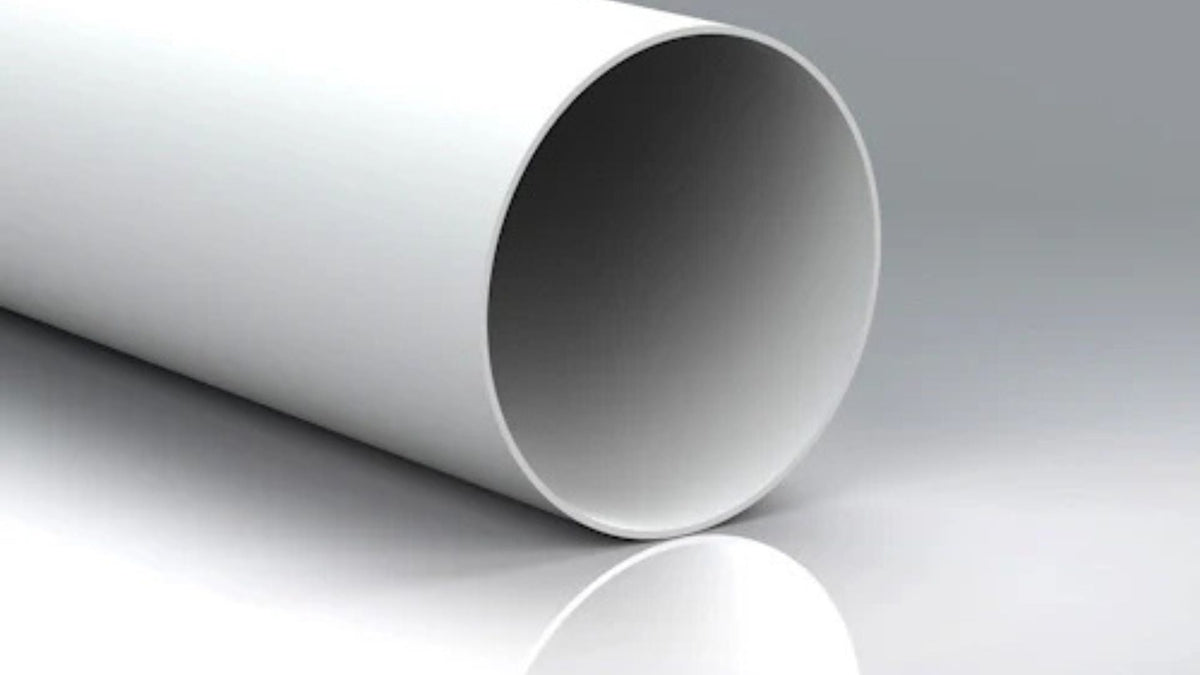
Traditional spiral-wound galvanised steel or rigid plastic circular ductwork (the type you see in commercial buildings) is most commonly used in residential MVHR systems. Rigid duct offers very low resistance to air flow and is highly durable. It is most used for duct runs between atmosphere and the MVHR unit and can be supplied in 100/125/150160/180/200mm diameter. When used for MVHR to atmosphere or if installed in cold spaces, ducts must be insulated to comply with regulations.
2. Insulated mass-flow ductwork (Aerfoam)
An alternative to rigid duct is insulated mass-flow ductwork (such as the Ubbink Aerfoam system). This is a premium duct option which is supplied pre- insulated. It is designed for use as the main duct between the MVHR unit and atmosphere. In unheated loft spaces, uninsulated ductwork loses a significant amount of heat during winter and gains heat in summer, both of which reduce system efficiency. Insulated duct eliminates this problem without the need to wrap ductwork in separate insulation (which is time-consuming and often done poorly).
- Maintains duct temperature throughout unheated voids
- Eliminates condensation on duct outer surfaces in cold conditions
- More expensive than standard steel but saves labour on insulation
- Available in large diameters suitable for main duct spines
3. Semi-rigid/radial ductwork
Semi-rigid ductwork, such as Zehnder ComfoTube Flow, is the most commonly used system in UK residential MVHR installations. It consists of a twin-walled plastic duct that can be bent by hand to navigate around obstacles, whilst maintaining a consistent cross-section. Semi-rigid ductwork is available in both circular (75mm, 90mm) and rectangular (138 x 51mm) profiles. The rectangular duct is particularly popular where duct runs need to be concealed within floor zones or where duct height is restricted by the building fabric.
- Low airflow resistance when kept reasonably straight
- Can negotiate gentle curves without fittings
- Available in compact rectangular profiles for tight floor zones
- Requires distribution boxes (manifolds) to connect multiple ducts to a single larger main duct
Semi rigid radial systems use distribution manifolds to provide multiple dedicated duct runs to all rooms - either supply or extract.
The system is fast to install as the flexible duct can be threaded through ceiling joists and wall cavities without cutting. It is widely used in both new build and retrofit applications.
Important note on flexible duct
Generic flexible duct (foil-laminate draught hose) is not suitable for MVHR use and should not be confused with an engineered flexible duct designed for the purpose. The wrong product introduces excessive resistance, is prone to sagging and condensate retention, and significantly degrades system performance.
Key principles for all MVHR ductwork
- Minimise bends - every 90-degree bend adds the resistance equivalent of approximately 3m of straight duct
- All joints must be properly sealed - use the manufacturer's approved tape or push-fit collars with mastic
- Insulate any ductwork running through unheated spaces
- Do not reduce duct sizes below those specified in the design
- Never use flexible duct for runs; it sags over time and traps condensate
Epicair supplies the full Ubbink semi-rigid range, Aerfoam insulated ductwork, and a comprehensive accessories range. If you need help specifying the right ducting for your project, then please contact us on 01892 600121 and our UK based experts will advise on the right system for your project.
Why read this relevant blog: What do I need to know about MVHR ducting?